Transfer or direct-to-fabric
Every dye sublimation printer uses disperse dye ink, which bonds with polyester when heated. The question is where the ink lands first.
In transfer sublimation, the printer prints a mirror image onto a coated transfer sheet. The sheet is then pressed against the fabric in a calender or heat press, and the heat moves the dye from the sheet into the polyester. Transfer printing gives fine detail and very consistent color on light, tightly woven polyester, because the sheet controls how the ink spreads. It is the usual choice for sportswear and fashion prints. The costs are the transfer media you buy for every square meter, the calender, the energy to run it, and the time and labor of a second process.
In direct-to-fabric sublimation, the printer jets disperse ink straight onto the polyester, and the fabric then passes through heat to fix the dye. There is no transfer sheet and no second alignment step. The ink also penetrates deeper into the fabric, which is why direct printing is preferred for flags, knitted polyester and backlit fabric, where the print should show through to the back or glow evenly when lit. Direct printing usually needs fabric suitable for direct disperse ink and a printer with drying and media handling designed for fabric rather than for a smooth transfer sheet.
Which should you buy? If you print mostly sportswear and thin polyester garments with fine detail, transfer remains a strong choice. If you print flags, banners, soft signage, backlit fabric or home textiles, direct-to-fabric is usually simpler and cheaper to run: fewer consumables, fewer machines and fewer steps between file and finished product.
There is a third option for those products: printing both sides directly. A double-sided direct printer prints the front and back of the fabric in one job, so a flag shows a full, right-reading image on each face instead of relying on show-through. For flag and display printers, that removes the need to sew two printed layers together, which is often the most labor-intensive part of producing a double-sided flag.
Whatever you choose, test the method on your own fabric. Color, penetration and hand feel vary between fabrics, and the right method for your products is the one that looks right on the material your customers buy.
Width, printheads and speed
Once you have chosen a method, the next decisions are about capacity.
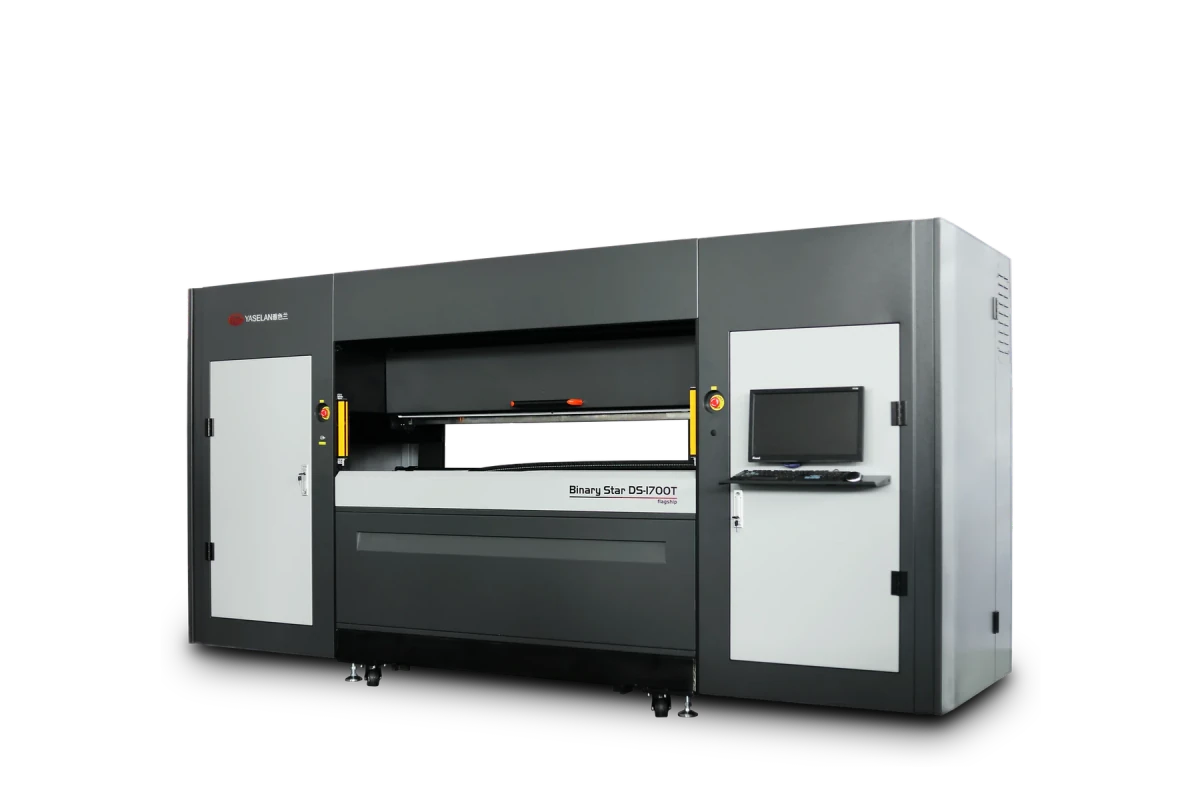
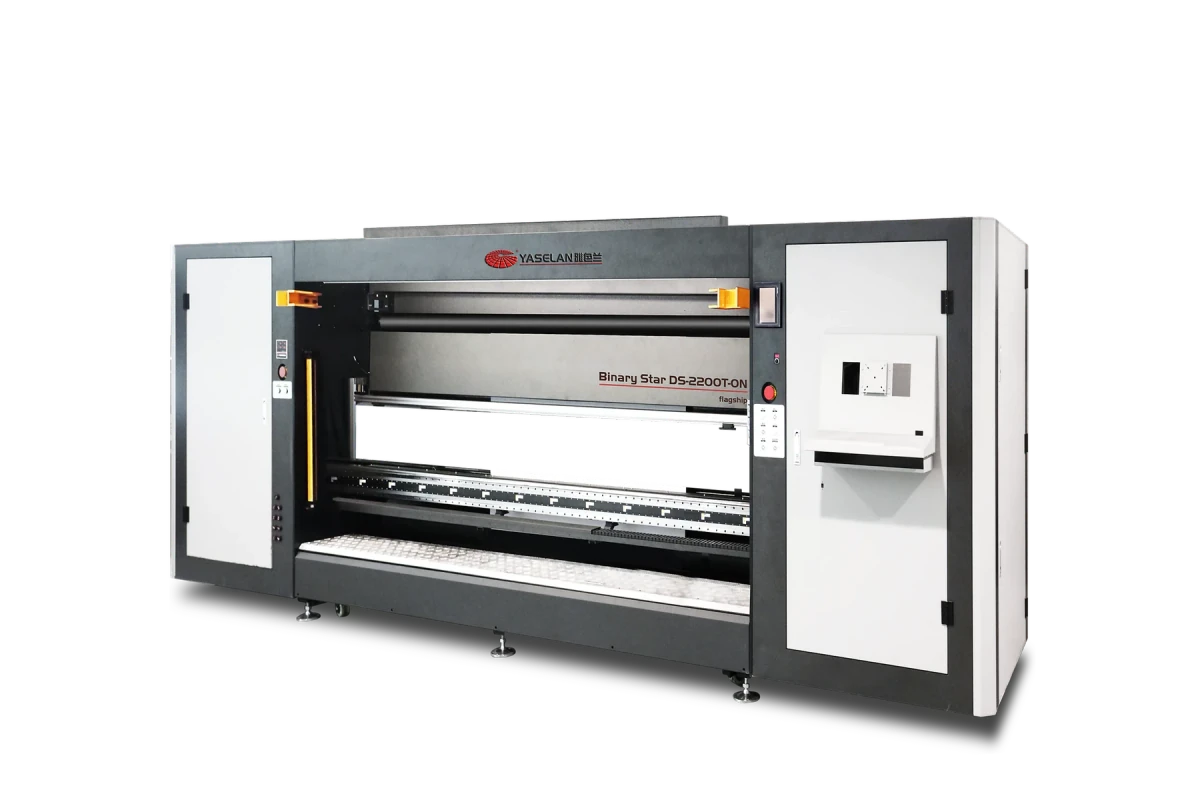
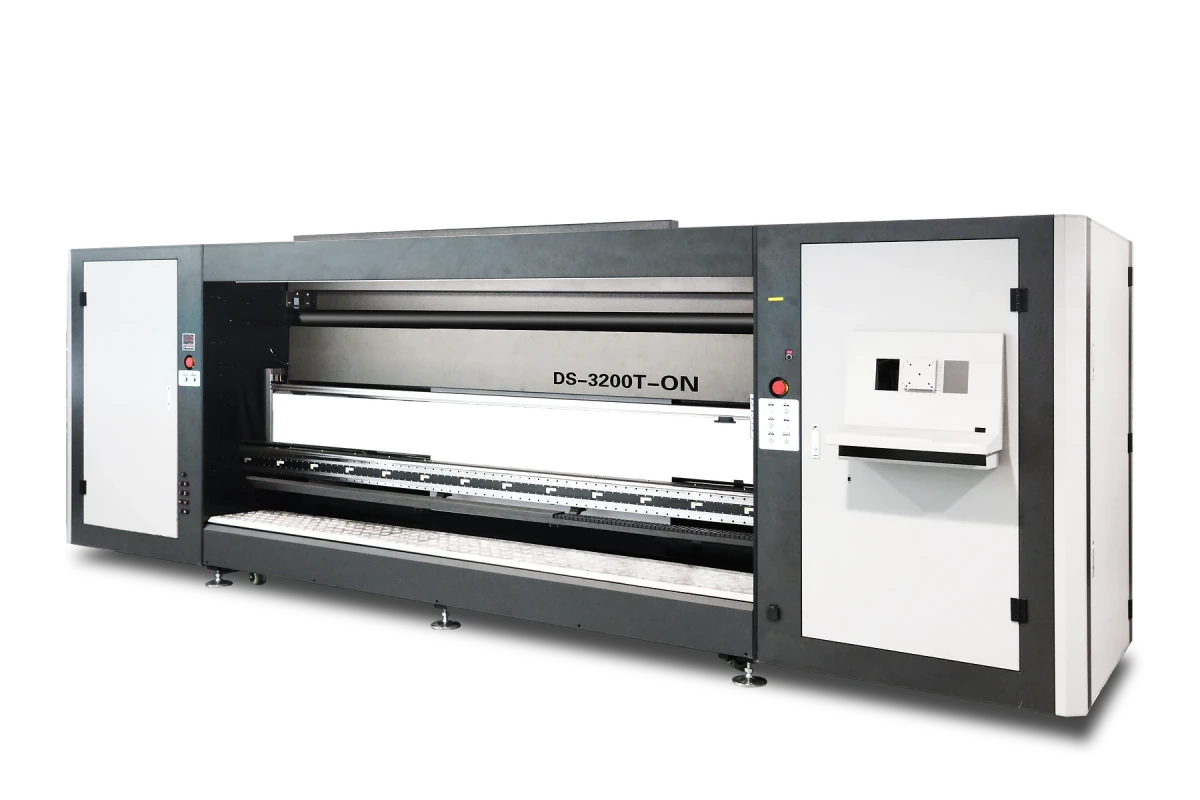
Print width should match the products you make most. Standard flags and many garment fabrics fit on 1.6 m to 1.8 m machines. Banners, curtains and table covers usually need around 2.2 m. Stage backdrops, wide lightbox graphics and exhibition walls need 3.2 m to print without seams. A wider printer can always print narrow fabric, but it costs more, uses more floor space and power, and runs below capacity if most of your work is narrow. Our textile range covers 1,600 mm (Binary Star S10), 1,700 mm (DS-1700T), 2,150 mm (DS-2200T-ON) and 3,200 mm (DS-3200T-ON).
Printheads decide resolution, reliability and speed. Industrial heads such as the Epson i3200-A1 are designed for continuous production, with many nozzles per head and stable jetting over long runs. Head count matters as much as head type: more heads mean more nozzles covering each pass, which raises speed or allows more colors. A printer with eight heads can run a four-color set twice for speed, or eight colors for a wider gamut, including orange, blue and fluorescent channels for brand and sports colors.
Speed figures are usually given for several print modes. Fewer passes mean faster printing and slightly less detail; more passes mean finer detail and deeper color. When you compare printers, compare the speed in the mode you will actually use for your products, not only the fastest figure.
Think about the whole line, too. The printer's real output is limited by drying and fixing. A machine that prints fast but leaves fabric damp will slow you down at the next station. Our textile printers dry the fabric before and after printing, with the temperature set for each fabric, and the DS-2200T-ON and DS-3200T-ON add a built-in oven. Media handling also matters: roll diameter, tension control and edge handling decide whether the printer can run unattended through a full roll.
Finally, check the software. A RIP that supports your file formats and color profiles saves hours of setup. Our textile printers work with Maintop, PrintFactory or NeoStampa, depending on the model, and accept TIFF, JPG, EPS and PDF files.
Ink, double-sided output and running costs
The purchase price is only part of what a sublimation printer costs. Over a few years, ink, consumables, labor and floor space usually add up to more than the machine itself, so it pays to look at how each design affects them.
Ink is the largest running cost. Direct-to-fabric printing uses disperse ink only; transfer printing uses disperse ink plus a transfer sheet for every square meter printed. If you print flags or banners in volume, removing the transfer sheet can make a noticeable difference to your cost per square meter. Ask suppliers which inks a printer can run, whether you can source them locally, and how the printer manages ink between jobs. Our textile printers use an ink purge and head capping system that keeps the heads ready when the machine is idle.
If you also print natural fibers, a printer that runs more than one ink family gives you more products from the same investment. The Binary Star S10 runs reactive, acid, disperse or pigment ink, so you choose the ink set that matches your main fabric when you order.
Double-sided printing changes the costs for two-faced products. The traditional way to make a double-sided flag is to print two flags and sew them back to back. That doubles the fabric and ink, adds sewing labor and produces a heavier flag that flies less well. A double-sided printer prints both faces of one layer in one job. You use one piece of fabric, skip the sewing step and get a lighter flag. For backlit fabric and room dividers, printing both faces in register also builds color density without a second print run.
Labor and space are the last factors. Every extra step, such as calendering, aligning transfers or sewing two layers, needs people and floor space. A direct, double-sided printer with drying built in can take several of those steps off your production line. That matters most in regions where skilled labor is scarce or where factory space is expensive.
When you request quotes, give each supplier the same information: the fabrics you print, the widths, the products and your monthly volume. Ask for prints on your own fabric and the speed in the mode you will use. With those facts, you can compare printers on what they will cost you to run, not only on the price of the machine.