Analog methods: screen and rotary
Screen printing pushes ink through a stencil on a fine mesh, one screen per color. It is simple, works on almost any fabric and gives strong, opaque color, which is why it remains common for T-shirts, tote bags and simple logos. The limits are setup and color count. Every color needs its own screen, every screen needs to be made, registered and cleaned, and photographic images with smooth gradients are difficult. For a few dozen pieces, the setup often costs more than the printing.
Rotary screen printing turns the same idea into a continuous process. Cylindrical screens print the fabric as it moves under them, one cylinder per color, at very high speed. For tens of thousands of meters of one curtain or dress design, rotary printing is hard to beat on cost per meter. But engraving a set of cylinders takes time and money, and changing designs means stopping the line. Mills that run rotary machines usually need large minimum orders to make the economics work.
Both analog methods share the same weakness: they are built for long runs of a single design. Buyers increasingly order smaller quantities, more designs and faster delivery. Event flags change every season, home textile brands test patterns before committing, and display printers produce one-off backdrops for each trade show. Each of those jobs carries the full setup cost of screens or cylinders.
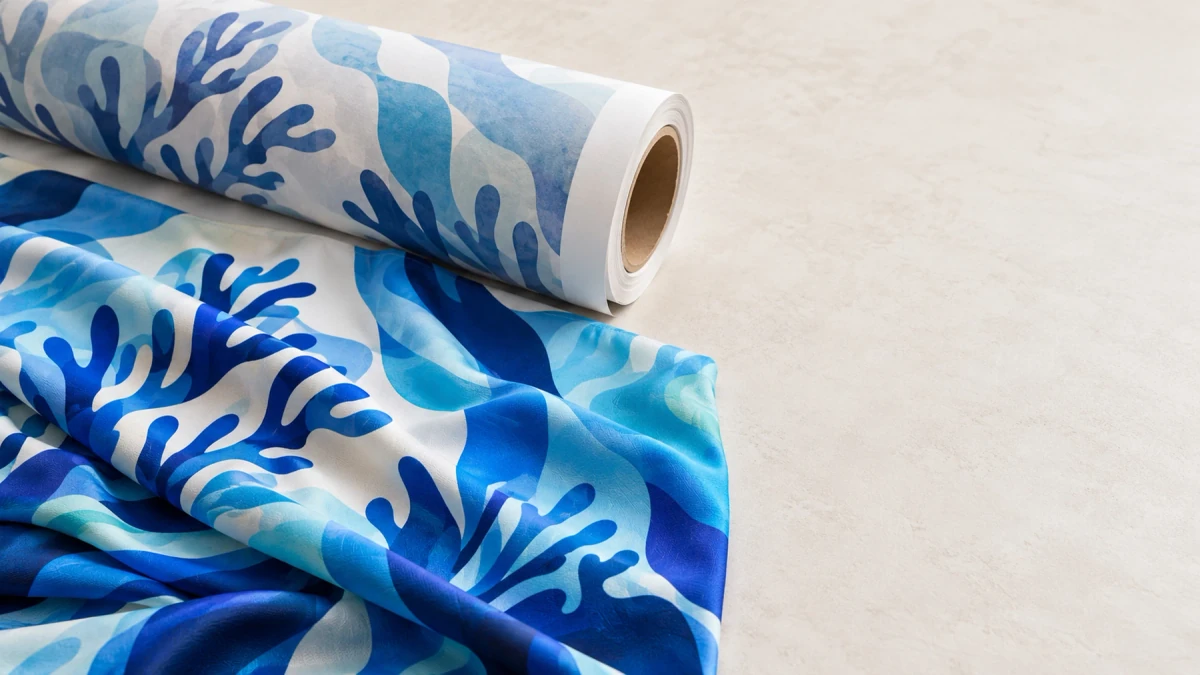
Digital textile printing removes that cost. An inkjet printer reads the design straight from a file, so there are no screens, no cylinders and no minimum quantity. The first meter costs the same as the thousandth. Designs can change on every roll, colors are limited only by the ink set, and photographic images print as easily as solid colors. Digital printing is slower per meter than rotary, but for runs from a single piece to several thousand meters it is usually faster from order to delivery, because there is no preparation step at all.
Many textile businesses now run both: rotary or screen for their bestselling, high-volume designs and digital for everything else. Others, especially sign and display printers, work only digitally. Whichever applies to you, the next decision is which digital method to use, and that depends mostly on the fabric.
Digital methods and the inks they use
Digital textile printers all use inkjet heads, but the inks differ, and the ink decides which fabrics you can print and what happens after printing.
Transfer sublimation is the most familiar method. The printer puts disperse dye ink onto a coated transfer sheet, and a heat press or calender then transfers the dye into polyester fabric at around 200 °C. The dye turns to gas, bonds with the polyester fibers and becomes part of the fabric, so the print does not crack or wash out. Transfer sublimation gives sharp detail and works on light polyester, but it adds a second machine, consumes transfer sheets and takes an extra step for every job.
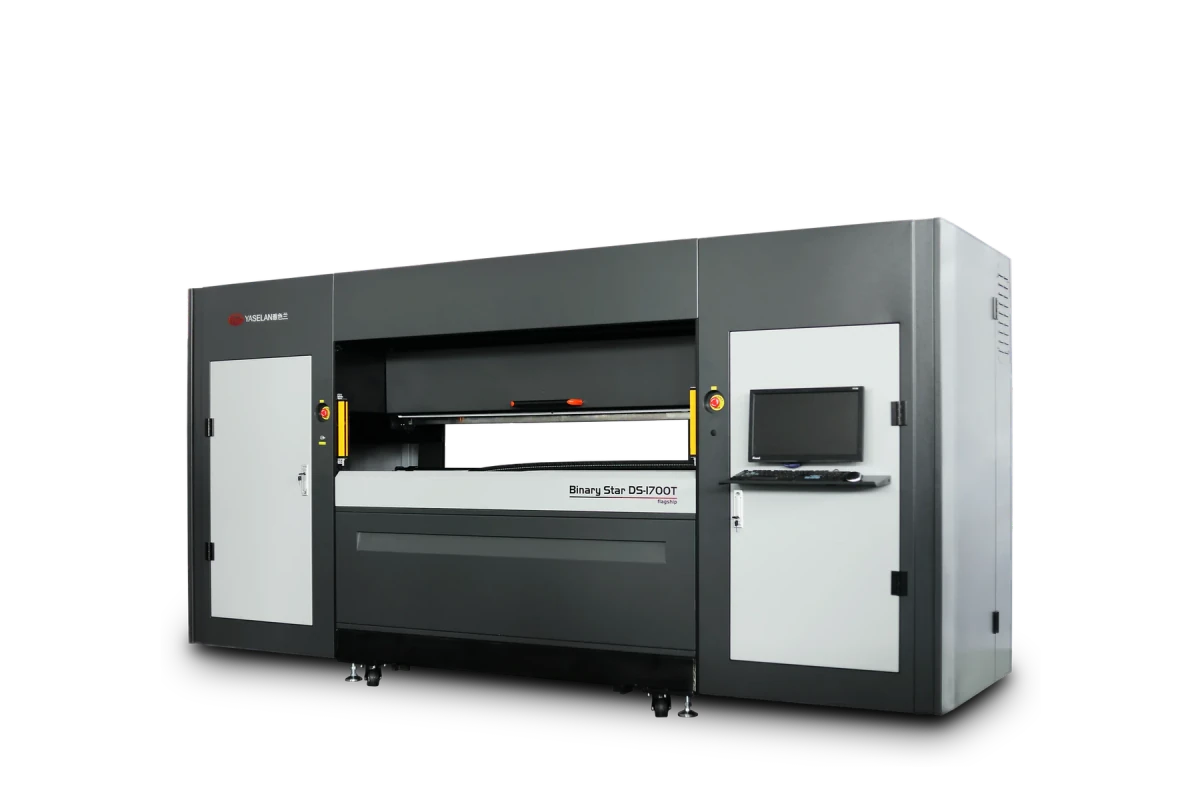
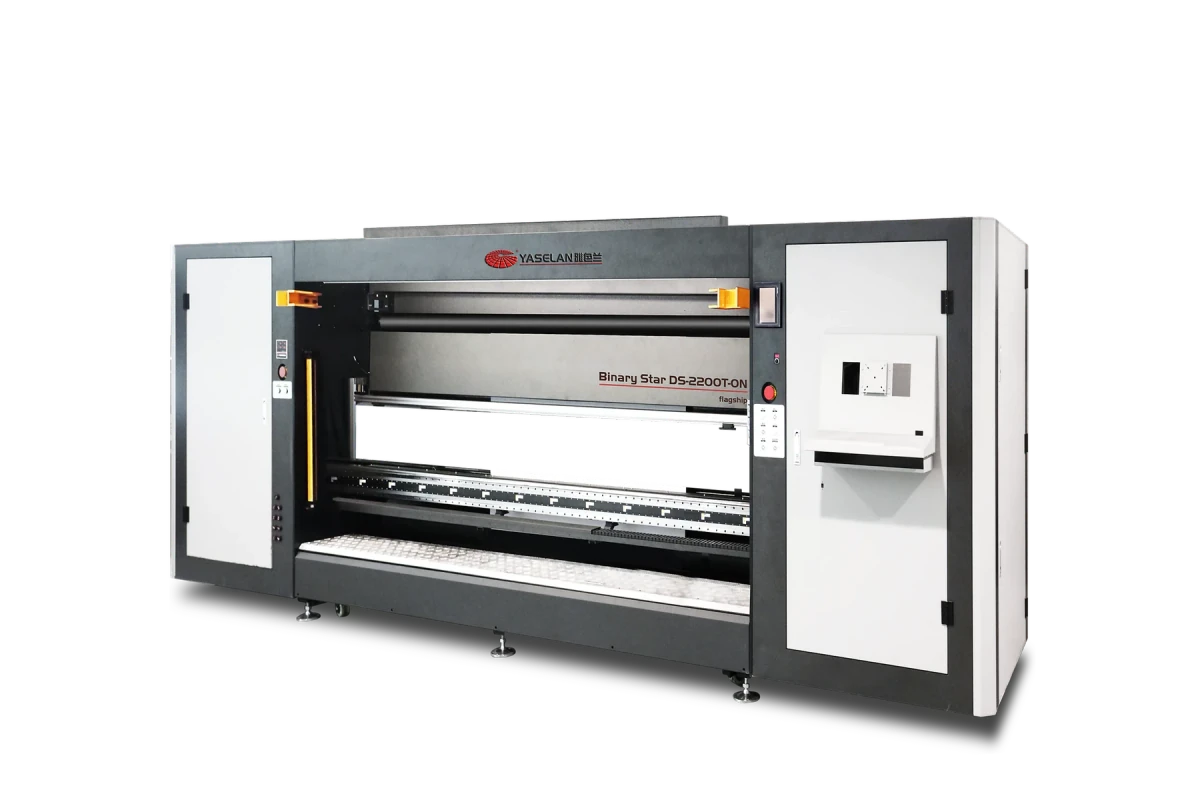
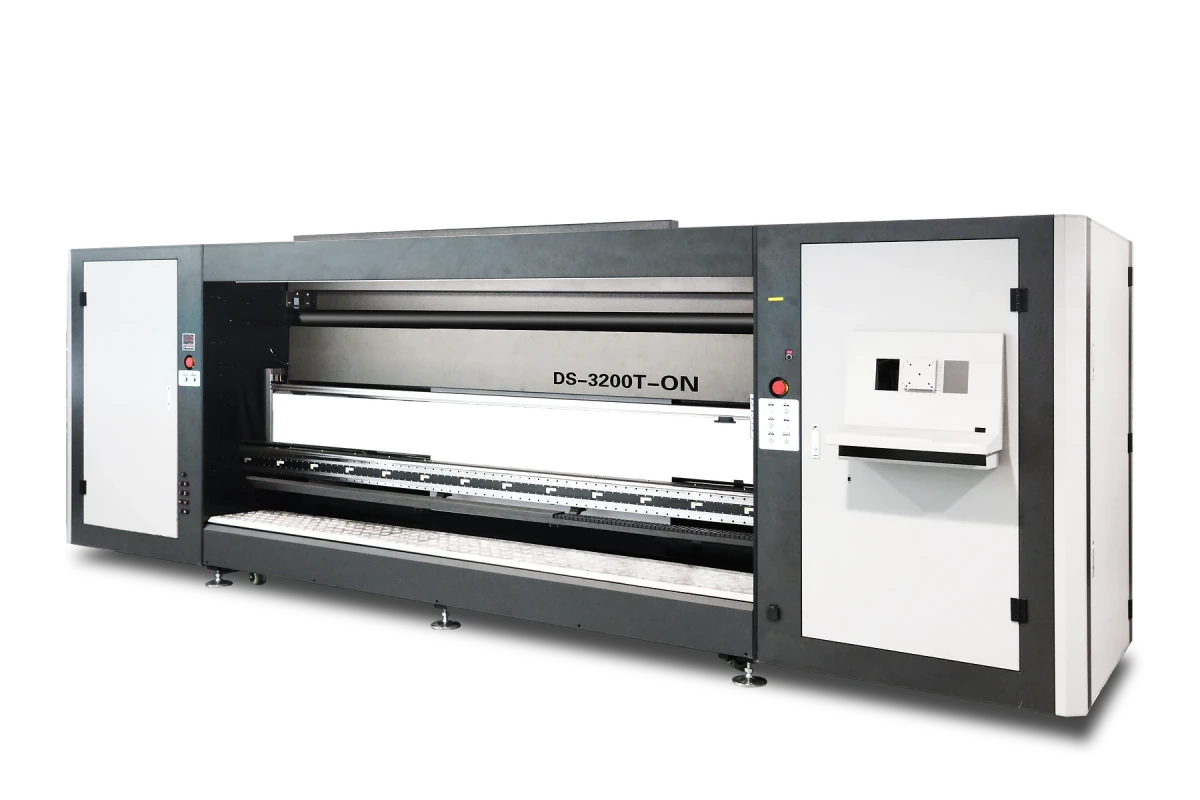
Direct-to-fabric sublimation, often called direct sublimation or direct disperse printing, skips the transfer sheet. The printer jets disperse ink straight onto the polyester, and the fabric is then fixed with heat. Because the ink goes into the fabric directly, it penetrates more deeply, which matters for flags and backlit fabric that are seen from both sides or with light behind them. There is no transfer media to buy and no sheet to align. Our DS-1700T, DS-2200T-ON and DS-3200T-ON print disperse ink directly onto polyester.
Reactive ink is used for cellulose fibers such as cotton, linen and viscose. The dye forms a chemical bond with the fiber, giving bright, soft prints that survive repeated washing. The trade-off is processing: fabric usually needs pre-treatment before printing, and steaming and washing afterward to fix the dye and remove excess. Reactive printing is the standard for fashion and home textiles made from cotton.
Acid ink works on protein fibers such as silk and wool, and on nylon. Like reactive printing, it gives brilliant color with a soft hand, and it also needs pre-treatment, steaming and washing. It is widely used for scarves, swimwear and luxury fabrics.
Pigment ink sits on the surface of the fiber, held by a binder, instead of dyeing it. It works on many fabric types, including blends, and post-processing is simple: usually heat curing, with no steaming or washing. Pigment prints can feel slightly stiffer than dye prints, and color depth on dark fabrics is more limited, but the simple workflow makes pigment popular for short runs on mixed fabrics.
Several of our printers can run more than one of these ink types. The Binary Star S10, for example, runs reactive, acid, disperse or pigment ink, so the same model can serve polyester display work or natural-fiber products.
Choosing a method for your products
Start with the fiber. Polyester is printed with disperse ink, either by transfer or directly. Cotton, linen and viscose call for reactive ink, silk, wool and nylon for acid ink, and mixed or unknown fabrics are often easiest with pigment. If most of what you print is one fiber, the choice is already made; if you print several, look for a printer that can run more than one ink type.
Next, think about the product. Flags, banners and backlit fabric are seen from both sides or with light shining through, so ink penetration matters. Direct-to-fabric printing generally pushes more color through polyester than transfer printing, and a double-sided printer goes further by printing a full image on each face. For a flag, that means the back reads correctly instead of showing a reversed, faded mirror image.
Home textiles such as curtains and room dividers are also seen from both sides, and are often made of polyester or polyester blends. Printing both faces gives a finished look on each side without a lining. Fashion fabrics and bedding made from cotton are usually printed on one side with reactive ink and then washed.
Run length is the third factor. For long runs of one design on one fabric, rotary printing may still be cheapest per meter. For short runs, many designs and fast turnaround, digital wins because there is no setup. Most sign and display printers, flag makers and custom home textile businesses are firmly in digital territory.
Finally, consider the whole process, not only the printer. Reactive and acid printing need steaming and washing equipment and water treatment. Pigment needs a curing unit. Transfer sublimation needs a calender and transfer media. Direct sublimation needs a heat fixation step but no transfer media. Our textile printers dry the fabric before and after printing, and the DS-2200T-ON and DS-3200T-ON add a built-in oven, which reduces the separate equipment you need next to the printer.
Print width ties these factors together. A 1.6 m or 1.7 m machine covers standard flags and many apparel fabrics; 2.2 m covers most banners and curtains; 3.2 m covers wide backdrops, stage curtains and large lightbox graphics without seams. Choose the width that fits the products you sell most often, then the method that fits the fabric, and you will have narrowed the field to a handful of machines.